Courses
Online, self-paced classes for wastewater and drinking water operators, organized as learning paths. Every class stands on its own, so you choose only what you need.
Choose a learning path
Every online class is self-paced, with a student manual, a certification quiz and a certificate of completion. Choose a class to see what it covers and to register. Each class shows its own CEU credit status.
- Operator Fundamentals
- Activated Sludge and Process Control
- Advanced Treatment
- Solids and Biosolids
- Laboratory
- Certification Preparation
- Drinking Water
- Mechanical, Electrical and Instrumentation
- Collection Systems
Want a suggested order? See the learning paths for new operators, solids crews, certification and more.
Operator Fundamentals
Follow the water through the plant: the headworks, primary treatment and disinfection, the processes every operator runs first.
| Class | Length | Price | CEU credit |
|---|---|---|---|
| Headworks Operation | 2 hours | $60 | CEUs available where approved |
| Primary Treatment | 2 hours | $60 | CEUs available where approved |
| Disinfection Systems | 2 hours | $60 | CEUs available where approved |
Secondary treatment and lab basics are part of a strong start too: see Activated Sludge Basics and Laboratory Basics.
Coming topics
- Wastewater fundamentals: the plant from influent to effluent
- Solids handling overview
- Operator math for wastewater
Activated Sludge and Process Control
A three-level series. Start with Basics, move to Process Control, then Advanced. Each level builds on the one before.
Level 1 Activated Sludge Basics Level 2 Activated Sludge Process Control Level 3 Advanced Activated Sludge Process data Using AI for Plant Performance
| Class | Length | Price | CEU credit |
|---|---|---|---|
| Activated Sludge Basics | 3 hours | $100 | CEUs not yet approved, for learning only |
| Activated Sludge Process Control | 4 hours | $120 | CEUs available where approved |
| Advanced Activated Sludge | 4 hours | $160 | CEUs not yet approved, for learning only |
| Using AI for Plant Performance | 4 hours | $120 | Wastewater licenses: CEUs available where approved. Drinking water licenses: CEUs not yet approved, for learning only. |
Across the three levels: F/M, SRT and sludge age, RAS and WAS, clarifier loadings and the state point, settleability and SVI, the microscope, filaments and foam, nitrification, denitrification, phosphorus removal and troubleshooting. Using AI for Plant Performance adds checking process math and plant data. Advanced Activated Sludge and Using AI for Plant Performance are also listed in the Advanced Treatment path.
Coming topics
- Microscopy in depth
- OUR and SOUR testing in depth
Advanced Treatment
Treatment beyond conventional activated sludge: biological nitrogen and phosphorus removal, using AI to check plant performance, and industrial metal finishing wastewater.
| Class | Length | Price | CEU credit |
|---|---|---|---|
| Advanced Activated Sludge | 4 hours | $160 | CEUs not yet approved, for learning only |
| Using AI for Plant Performance | 4 hours | $120 | Wastewater licenses: CEUs available where approved. Drinking water licenses: CEUs not yet approved, for learning only. |
| Metal Finishing Wastewater Treatment | 4 hours | $120 | CEUs available where approved |
Advanced Activated Sludge and Using AI for Plant Performance are also part of the Activated Sludge and Process Control path. It is the same class at the same price in both places.
Coming topics
- Membrane bioreactors (MBR)
- Sequencing batch reactors (SBR)
- IFAS and MBBR
- Tertiary treatment
- Water reuse
- Membrane troubleshooting
Solids and Biosolids
From the digester to the cake: how digesters work, how each dewatering machine works, then a deep look at the centrifuge.
| Class | Length | Price | CEU credit |
|---|---|---|---|
| Anaerobic Digestion | 4 hours | $120 | CEUs available where approved |
| Dewatering: Centrifuge, Belt Press and Screw Press | 3 hours | $90 | CEUs available where approved |
| Centrifuge Operation | 4 hours | $120 | CEUs available where approved |
Polymer dose math is taught in both dewatering classes.
Coming topics
- Thickening
- Aerobic digestion
- Thermal hydrolysis (THP)
Laboratory
Sampling, the core tests and QA/QC behind every number on the monthly report.
| Class | Length | Price | CEU credit |
|---|---|---|---|
| Laboratory Basics | 2 hours | $60 | CEUs available where approved |
Practice with the free lab calculators in the Operator Toolbox.
Certification Preparation
Class prep courses for the Indiana wastewater and industrial certification exams.
| Class | Length | Price | CEU credit |
|---|---|---|---|
| Indiana Class I and II Certification | 12 hours | $200 | CEUs available where approved |
| Indiana Class III and IV Certification | 16 hours | $240 | CEUs available where approved |
| Indiana Industrial Class C and D | 6 hours | $180 | CEUs available where approved |
See the Certification Prep page for the state list and the free practice quizzes.
Coming states
- Oregon
- Washington
- California
- Hawaii
Drinking Water
For drinking water operators. CEUs for these classes are not yet approved in any state, so purchase is for learning only. Ask us to tell you when CEUs are approved.
| Class | Length | Price | CEU credit |
|---|---|---|---|
| Chemicals Used in Water Treatment | 4 hours | $120 | CEUs not yet approved, for learning only |
| Groundwater Treatment | 2 hours | $60 | CEUs not yet approved, for learning only |
| Surface Water Treatment | 4 hours | $120 | CEUs not yet approved, for learning only |
| The Water Cycle and Source Water | 2 hours | $60 | CEUs not yet approved, for learning only |
| Drinking Water Filters | 2 hours | $60 | CEUs not yet approved, for learning only |
| Water Math | 4 hours | $120 | CEUs not yet approved, for learning only |
| Drinking Water Disinfection | 4 hours | $120 | CEUs not yet approved, for learning only |
| Distribution System Basics | 4 hours | $120 | CEUs not yet approved, for learning only |
| Wells: Types, Operation and Troubleshooting | 3 hours | $90 | CEUs not yet approved, for learning only |
Coming paths
These paths do not have online classes yet.
Mechanical, Electrical and Instrumentation Coming path
- Pumps
- Motors
- Valves: Don't Be Isolated: Valves for Water and Wastewater Operators (coming soon)
- Instrumentation
- SCADA
- Controls
- Reading P&IDs
- Troubleshooting equipment
Until then, try the free instrument and pump calculators.
Collection Systems Coming path
A collection systems path is planned. Ask us to tell you when it opens.
Topics we teach
These are the wastewater topics we teach, from the headworks to solids handling, the lab and the control room, including reading P&IDs and preparing for the certification exam. Choose the ones your staff needs, or ask us to put a custom set together.
Fundamentals and certification
- Treatment overview: influent to effluent
- Why we treat wastewater: cBOD, TSS, ammonia, phosphorus and what they do to a river
- Operator math: the pounds formula (8.34), loadings, detention time, flow
- Certification exam preparation: process, math and lab questions
- Practice exams, worked math problems, answer keys
- Laboratory basics for the exam
Reading P&IDs and plant drawings
- Symbols, lines, valves and instrument tags
- Process flow diagrams and plant schematics
- Valve schedules and valve lineups: knowing which option you are running
- Setpoint tables and control narratives
- Drawings in troubleshooting, startup and training
Laboratory and process control testing
- TSS, BOD, ammonia, Standard Methods, QA/QC
- Operational field tests: settleometer, OUR and SOUR
- Microscope work and identifying filaments
- Sampling, and checking instruments against the lab
- Reading the monthly operating report
Permits, NPDES and reporting
- The Clean Water Act and NPDES permits
- Reading your permit limits
- Monthly operating reports: checking the numbers
- Calculating an exceedance in pounds
- Biosolids rules for hauling and land application
Safety
- Digester gas, methane and H2S safety
- Confined space entry
- Lockout/tagout and electrical isolation
- High-speed rotating equipment
- Pressure vessels, steam and nitrogen
Headworks and primary treatment
- Screening and grit: equipment, operation, troubleshooting
- How headworks affects every process downstream
- Sedimentation, sludge and scum removal
- Primary clarifier performance and math
Activated sludge and secondary treatment
- Heterotrophs, nitrifiers, protozoa and filaments
- Indicator organisms and sludge age
- Dissolved oxygen, aeration and blower problems
- SRT, MCRT, sludge age and F/M
- RAS and WAS control to hold a target SRT
- Settleability: SSV30 and SVI
- Operating a healthy secondary process
- Daily process control routine: what to check, adjust, and how long to wait
- Foam, bulking, rising sludge and filaments
- Storm flow and high flow operation
- Secondary treatment math
Nutrient removal
- Nitrification and denitrification: MLE and anoxic zones
- Alkalinity balance and pH
- Ammonia control and winter nitrification
- Biological selectors
- Biological phosphorus removal and phosphorus-accumulating organisms
- Chemical phosphorus removal
- Nitrogen removal in a membrane bioreactor
Secondary clarifiers
- How secondary clarifiers work
- Surface overflow, solids and weir loading, detention time
- Sludge blanket control and sludge removal
- Optimizing clarifiers during high flow
- Troubleshooting clarifier problems
Disinfection and effluent quality
- UV disinfection and effluent E. coli limits
- Post-aeration and effluent dissolved oxygen
- How effluent solids affect disinfection
Solids handling and dewatering
- Know your sludges: what comes in, how thick
- Thickening: gravity, rotary screen and gravity belt thickeners
- Storage basins, raw sludge pumps, valve lineups
- Polymer: how it works, dose math, jar testing
- Centrifuge dewatering: parts, startup, operation, shutdown, adjustments, troubleshooting
- Screw press operation and troubleshooting
- Dewatering mass balance and solids capture
- Cake production, hauling and biosolids
- Thermal hydrolysis (THP) systems
- Dissolved air flotation (DAF) and biological contactor (HRBC) systems
Anaerobic digestion
- The four biological stages, sludge to methane
- Alkalinity, volatile acids and the VA/ALK ratio
- Mixing, heating and heat exchangers
- Feeding and withdrawing sludge
- Digester gas: quality, systems, burners, flares
- Digester math: HRT, VS loading, VS reduction, gas production
- Commissioning a new digester, including nitrogen purging and seeding
- Upsets: souring, temperature loss, mixing loss, foaming, FOG slugs
Odor control
- Foul air and H2S: why we treat it
- Biofilter operation: air, water and bed
- Odor math: empty bed residence time, H2S loading, removal
SCADA, instrumentation and controls
- Control loops, interlocks and alarms
- Reading SCADA trends
- Screening data for flatlines, spikes and drift
- Checking analyzers against the lab
- HMI setpoints and controller logic
- When the PLC goes down, and restarting after a stop
Operations and maintenance
- Startup, normal operation and shutdown procedures
- Commissioning new processes and equipment
- Daily rounds and checklists
- Pumps, blowers, mixers and valves for operators
- Process optimization and energy savings
- Writing and using a plant O&M manual
Troubleshooting
- A systematic method: confirm, define, check, adjust one thing at a time
- Reading symptoms: what you see and what it means
- Alarm response and first actions
- Real operating days as case studies
AI for plant performance
- AI as a troubleshooting partner
- Writing good prompts for operators
- Checking every AI answer with math, the lab and instruments
- Guardrails: AI advises, operators decide
- Plant document libraries and document control
- Data security basics
Don’t see a topic you need? Ask. Live training is built around your plant, and online training covers general topics only.
Any class can also be taught live over Microsoft Teams, customized for your staff. Request a quote for live Teams training.
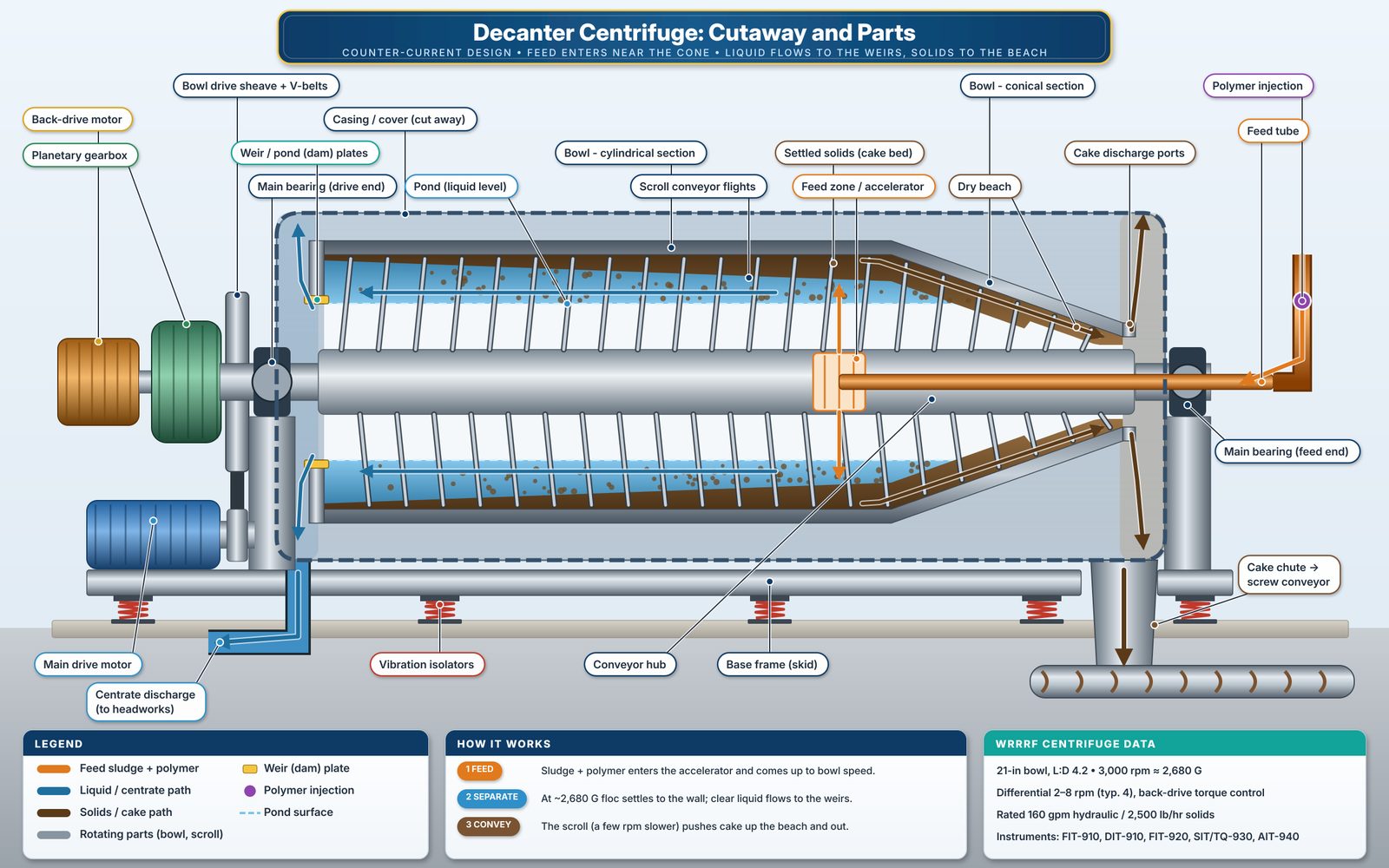
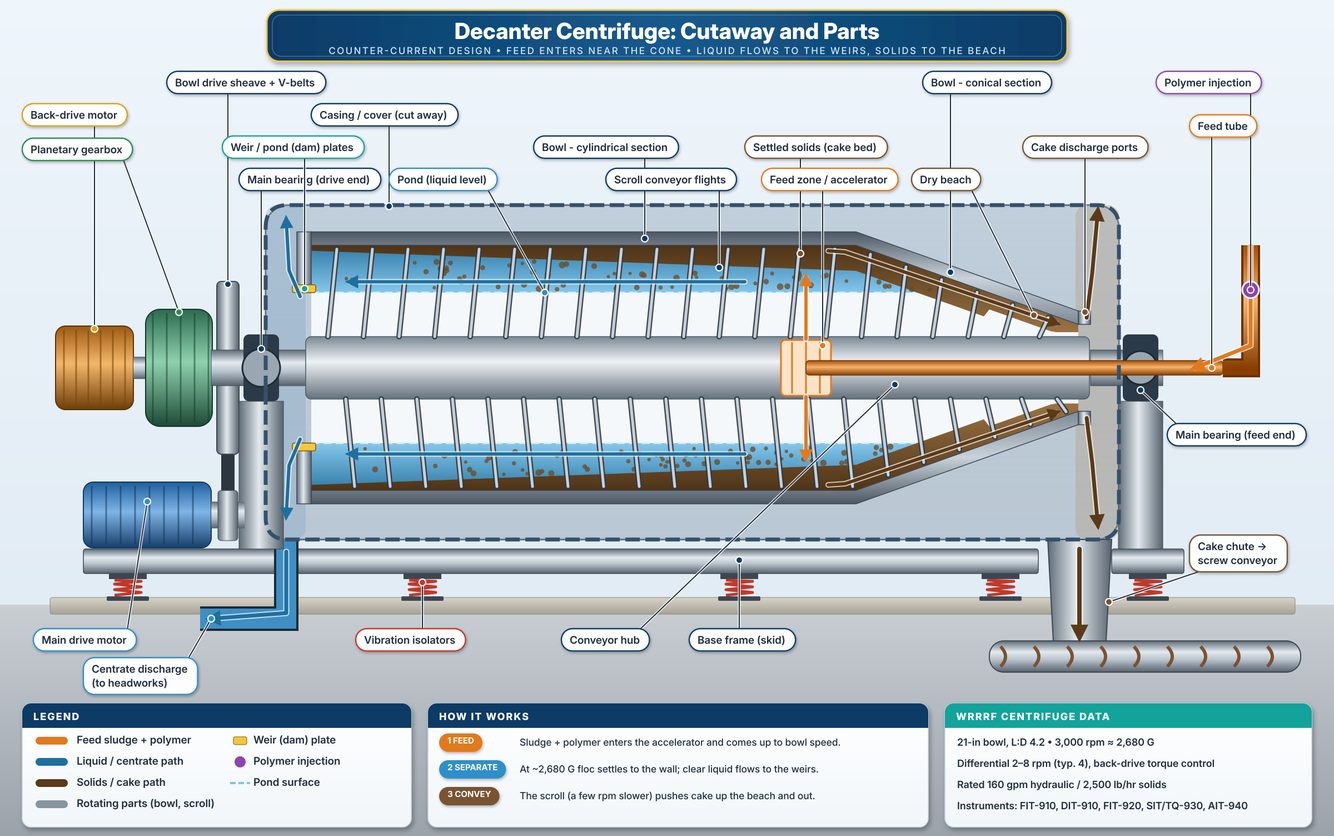
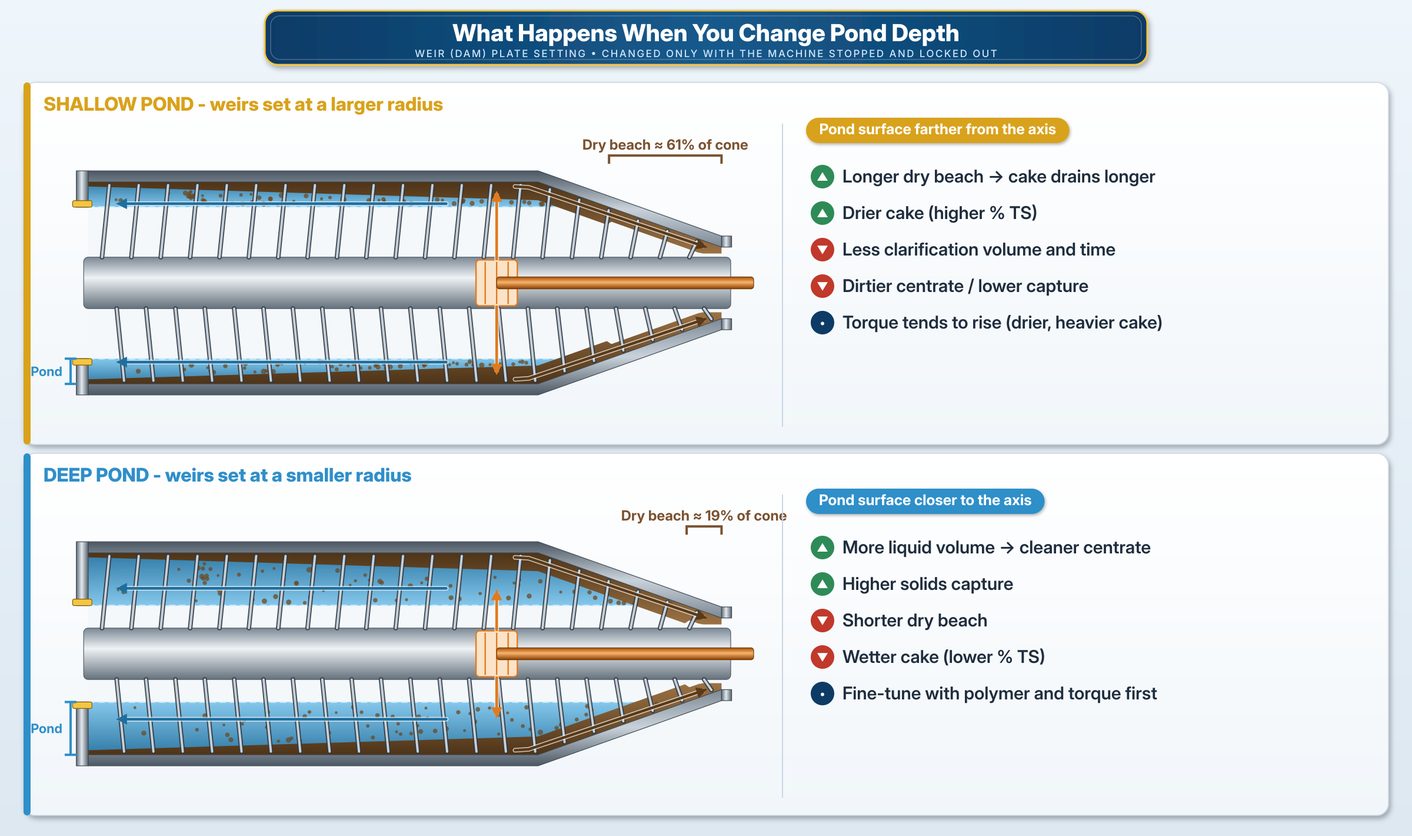
Centrifuge dewatering
A decanter centrifuge separates water from sludge with speed and a scroll that conveys the solids. The class covers the parts, startup, operation, shutdown, adjustments and troubleshooting.
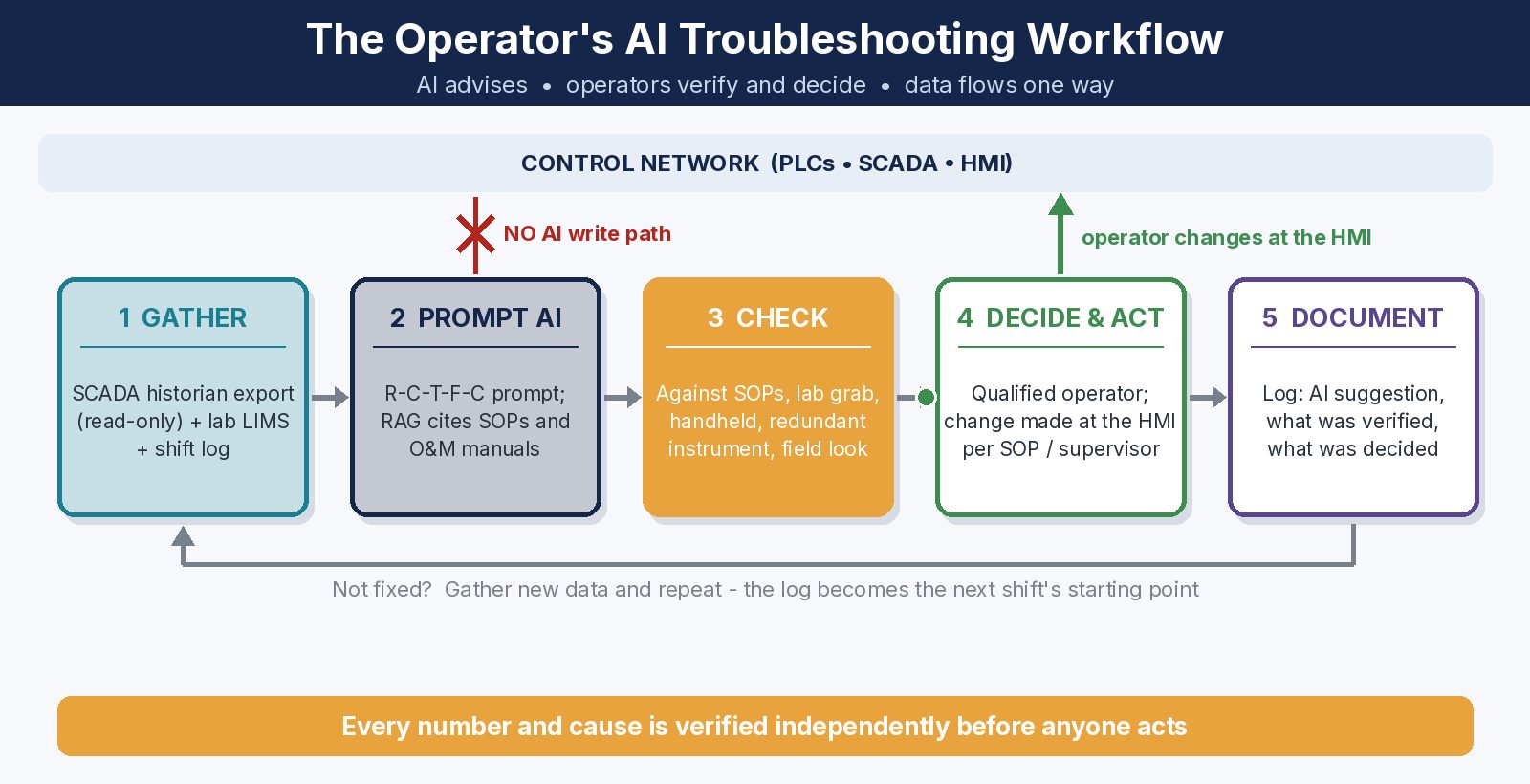
Using AI for plant performance
AI can help operators troubleshoot, as long as every answer is checked and an operator makes the decision. This is the five-step workflow taught in the class.
Ask about a class
Tell us which classes your staff needs and we will plan the training with you.
Call 503-701-2766 or email help@ActivatedSludge.com.